You have narrowed down your next big purchase to two names: Apple iPhone 16 and Samsung Galaxy S25. Both are the best flagship phones 2026 has to offer. Both cost well above ₹80,000. But they feel completely different in your hand, behind the camera, and after hours of use.
This iPhone 16 vs Samsung Galaxy S25 comparison is not about fanboy arguments. It is about real-world tests: camera indoors and out, battery drain during a day out, gaming thermals, and that everyday smoothness that makes a phone worth its price. By the end, you will know exactly which one fits your life.
Why Compare These Two Specifically?
Every year, the iPhone and Galaxy S series define the flagship standard. Other phones like OnePlus, Pixel, or Xiaomi offer great value, but the iPhone vs Samsung debate decides the majority of premium sales in India and globally.
The iPhone 16 continues Apple’s polished, stable, and ecosystem-driven approach. The Samsung Galaxy S25 brings the latest Android innovations, AI features, and hardware flexibility. Choosing wrong means living with a phone that annoys you for two or three years. So let us get into the details.
Design and Build: Comfort vs Durability
Both phones use premium materials – aerospace-grade aluminium or titanium frames, glass backs, and top dust/water resistance (IP68). But they feel different.
iPhone 16 keeps the flat-edged design with slightly rounded corners. It feels solid and reassuring but can dig into your palm without a case. The new “Capture Button” (capacitive) is a smart addition for quick camera launch and zoom control. Weight is balanced, not too heavy.
Samsung Galaxy S25 continues with curved or slightly rounded edges (depends on base vs Plus model). It feels slimmer and lighter in hand. The in-display ultrasonic fingerprint sensor works fast and reliably – something iPhone fans miss because Apple sticks with Face ID only.
Our take: If you use a case always, the difference fades. Without a case, Galaxy S25 feels more ergonomic for most hand sizes. But iPhone 16’s flat screen is easier to apply tempered glass on.
Display: Brightness, Smoothness, and Outdoor Use
Both have 120Hz ProMotion or Adaptive refresh rate screens. Both reach excellent peak brightness (over 2000 nits). But there are subtle differences.
iPhone 16 uses a Super Retina XDR OLED (LTPO). Colour accuracy is superb, and auto-brightness adapts very naturally to changing light. The always-on display shows widgets and notifications without draining battery much.
Samsung Galaxy S25 uses a Dynamic AMOLED 2X. It gets even brighter (up to 2600 nits), making it slightly better for direct Indian sunlight. Samsung also offers more customisation – you can tweak white balance, screen mode (vivid or natural), and even per-app refresh rates.
Winner for outdoor visibility: Samsung Galaxy S25 by a small margin. Winner for colour accuracy out of the box: iPhone 16.
But honestly, both displays are fantastic. You will not be unhappy with either.
Camera Comparison: Not Just Megapixels
The best phone for camera debate has raged for years. In 2026, both have matured, but their strengths differ.
iPhone 16 Camera Highlights
- 48MP main sensor with better stabilisation
- 12MP ultra-wide with improved low light
- 12MP telephoto (3x optical – base model) or 5x on Pro
- Photonic Engine for natural skin tones and shadow detail
- Video recording remains class-leading (Dolby Vision HDR, Action mode)
iPhone 16 takes photos that look natural – colours are not oversaturated. Skin tones are accurate. The camera app is simple and fast. For parents shooting moving kids or for content creators filming on the go, iPhone is still the most reliable.
Samsung Galaxy S25 Camera Highlights
- 200MP main sensor (binned to 12MP for daily use)
- 12MP ultra-wide with autofocus (macro mode)
- 10MP telephoto with 3x optical, plus AI-enhanced 10x zoom
- Better night mode with less noise and more detail
- Expert RAW and astrophotography modes for enthusiasts
Samsung photos pop – more contrast, punchier colours, and brighter night shots. Some prefer that look for social media. Zoom performance is clearly better than iPhone’s base model. However, skin tones can sometimes look slightly artificial, and moving subjects occasionally blur because Samsung prioritises longer exposure.
Camera verdict: Choose iPhone 16 for natural photos, superior video, and consistent point‑and‑shoot. Choose Samsung Galaxy S25 for zoom, night shots, and if you like editing RAW files. There is no absolute winner – it depends on your taste.
Performance and Gaming: A18 Pro vs Snapdragon 8 Gen 4
Both chips are 3nm, both ridiculously fast. You will not notice speed differences in WhatsApp or Instagram. The difference appears in gaming, video export, and multitasking.
iPhone 16's A18 Pro chip has faster single-core performance. Apps open instantly, and iOS feels more responsive overall. For best gaming phones, iPhone’s MetalFX upscaling allows smooth gameplay at high settings without overheating as quickly as older models. However, sustained gaming (30+ minutes) still causes some thermal throttling – though less than before.
Samsung Galaxy S25's Snapdragon 8 Gen 4 has improved multi-core scores and better ray tracing support. Android games often offer higher frame rate options and custom graphics settings. But some S25 units (depending on region) may get Exynos instead of Snapdragon – always check before buying in India. Exynos variants historically run hotter and drain battery faster.
Gaming takeaway: For casual gaming, both are overkill. For hardcore BGMI or Genshin Impact, iPhone 16 offers more consistent frame rates over long sessions, but Samsung S25 (Snapdragon version) gives you more graphics tweaks.
Battery Life and Charging: Surprising Differences
This category shows how brand philosophies diverge. Many users searching for best phone for battery assume one is clearly better. Reality is nuanced.
iPhone 16 has a slightly larger battery than iPhone 15 (around 3600mAh on base model). Thanks to A18 efficiency, it comfortably lasts a full day of mixed use – 6 to 7 hours screen-on time. But charging is slow: 27W wired (0 to 50% in 30 minutes) and 15W MagSafe wireless. No charger in the box.
Samsung Galaxy S25 packs 4000mAh (base model) and supports 45W wired charging – 0 to 65% in 30 minutes. Wireless charging is 15W. You also get reverse wireless charging to top up your earbuds or another phone. However, battery life is similar to iPhone 16 in daily use – sometimes even slightly less due to 120Hz always-on and more background processes.
Winner for charging speed: Samsung Galaxy S25. Winner for standby battery drain: iPhone 16 (iOS manages background apps better). Neither will leave you stranded, but Samsung gets you back to full faster.
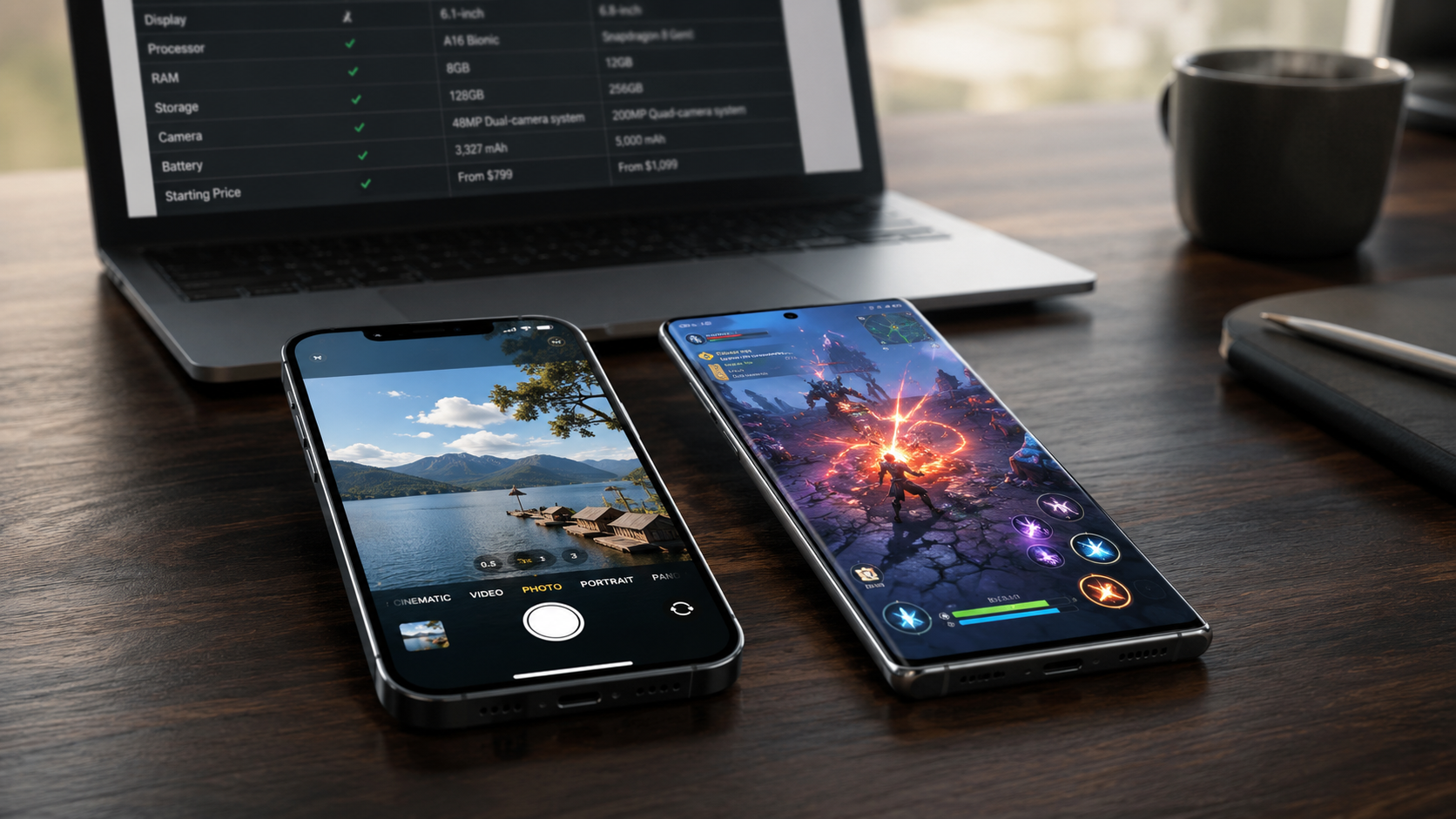
Before buying, compare live prices, warranty, seller rating and available offers. Use the comparison table and retailer links to check the latest deal.
Software and Updates: iOS vs One UI 7
This is where personal preference matters most.
iPhone 16 runs iOS 18 (upgradable to future versions). It is smooth, secure, and simple. The App Store has better quality control. iMessage, FaceTime, and ecosystem integration (Mac, iPad, Watch) are unmatched. But you cannot customise much – no always-on display tweaks, no third-party app icons easily, no sideloading (in most regions).
Samsung Galaxy S25 runs One UI 7 based on Android 15. Samsung promises 7 years of OS updates – as good as Apple. One UI is feature-rich: split screen, pop-up windows, Good Lock customisations, DeX desktop mode. You can sideload apps, change default apps freely, and truly make the phone yours. However, occasional stutters and duplicate apps (Samsung and Google) still exist.
Verdict: Choose iPhone if you value simplicity, privacy, and staying within Apple ecosystem. Choose Samsung if you love customisation, multitasking, and freedom.
Hidden Costs and Value for Money
Both start around ₹80,000 for base model (128GB). But check what is in the box.
- iPhone 16: No charger, no case, no screen protector. A 20W USB-C charger costs extra ₹1,500+. AppleCare+ is expensive.
- Samsung Galaxy S25: Often includes a fast charger in India (varies by region), plus occasional pre-order offers like Galaxy Buds or a case.
Also consider repair costs. iPhone screen replacement costs significantly more. Samsung offers cheaper authorised service in many cities.
Resale value: iPhone holds value much better. A two-year-old iPhone sells for 50-60% of original price. Samsung flagships drop to 35-40%.
Practical Checklist Before You Decide
- Hold both in a store – weight, grip, and one-handed use differ.
- Check ecosystem: Do you own a Mac/iPad? Get iPhone. Galaxy Buds/Watch? Get Samsung.
- Camera style: Do you prefer natural (iPhone) or vibrant (Samsung) photos?
- Charging habits: Need fast top-ups during the day? Samsung is better.
- Customisation: If you love changing icons, launchers, and themes, Android wins.
Common Mistakes When Choosing Between iPhone and Samsung
- Buying the base storage model without checking if you need 256GB (videos fill up fast).
- Ignoring version differences – some Samsung S25 units have Exynos, not Snapdragon.
- Assuming iPhone always has better battery – real-world tests show parity.
- Forgetting that cases and screen protectors add ₹2000+ to either phone.
- Buying based on brand loyalty without testing the actual model in hand.
Who Should Buy iPhone 16?
- You already use Apple products (Mac, iPad, Watch).
- You shoot a lot of video or want the most consistent camera.
- You prefer a simple, secure, and stable software experience.
- You care about resale value.
- You do not need fast charging or customisation.
Who Should Buy Samsung Galaxy S25?
- You love Android freedom and customisation.
- You want faster wired charging and reverse wireless charging.
- You need optical zoom (better than iPhone base model).
- You like vibrant, punchy photos straight out of camera.
- You prefer an in-display fingerprint sensor over Face ID.
Final Verdict: iPhone 16 vs Samsung Galaxy S25
There is no single “best” – only the best for you.
If you value video quality, ecosystem synergy, long-term resale, and a foolproof camera, the iPhone 16 is your phone. It is the safer, more consistent choice for most non-enthusiast buyers.
If you want faster charging, customisable software, better zoom, and vibrant display, the Samsung Galaxy S25 rewards those who like to tweak and explore.
For the average user reading this iPhone 16 comparison and Samsung Galaxy S25 comparison, the honest advice is: hold both. Your hand, eyes, and heart will tell you. Both are excellent flagship phones. Neither will disappoint if it matches your priorities.
NXTrendz Compare may earn a small commission when users buy through affiliate links, but our buying advice is based on specs, usability and value.
Use the comparison table and retailer links to check the latest deal. Prices change weekly, especially during festive sales. Do not rush – a flagship phone is a two-to-three-year companion. Choose wisely.
Frequently Asked Questions (FAQ)
1. Which has better battery life – iPhone 16 or Samsung Galaxy S25?
In daily mixed use, both last a full day (6-8 hours screen time). Samsung charges faster (45W vs 27W), so it wins for quick top-ups. Standby drain is lower on iPhone 16.
2. Is the Samsung Galaxy S25 camera better than iPhone 16 for low light?
Yes, Samsung captures brighter, more detailed night shots with less noise. But iPhone 16 retains more natural colours and shadow detail. If you post to Instagram without editing, Samsung may look more impressive initially.
3. Which phone is better for gaming – iPhone 16 or S25?
iPhone 16 offers more consistent frame rates over long sessions due to better optimisation. However, Samsung S25 (Snapdragon version) supports higher graphics settings in some Android games. For most users, differences are minor.
4. Will the iPhone 16 price drop after a few months?
Yes, during festive sales (Diwali, Republic Day), iPhone 16 typically sees ₹5,000-10,000 off plus bank offers. Samsung S25 prices drop faster and deeper – often ₹10,000-15,000 within 3-4 months.