Motorola Edge 60 Pro vs Nothing Phone 3: The Flagship Killer Battle
The "flagship killer" category has evolved. Gone are the days when you had to compromise on display, camera, or build quality to save money. The Motorola Edge 60 Pro specs and price and Nothing Phone 3 specs and price represent two distinct approaches to delivering near-flagship experiences at more accessible prices.
Motorola focuses on practical premium hardware: curved OLED display, fast charging, and clean software. Nothing prioritizes design, brand identity, and unique features like the Glyph interface. Both phones target buyers who want flagship-like performance without spending ultra-premium money.
This comparison helps you decide which approach suits your style. We break down design, performance, cameras, battery, and software to find the true value champion.
For a wider selection of smartphones in this segment, visit our Smartphones comparison page.
Quick Verdict
Buy the Motorola Edge 60 Pro if: You prioritize raw specifications, display quality, and charging speed. Motorola offers a larger battery, faster wired charging, and a curved display that feels more premium. It is ideal for media consumers, heavy users, and anyone who wants maximum hardware for their money.
Buy the Nothing Phone 3 if: Design matters to you. Nothing's transparent back, Glyph lighting, and unique software experience make it a conversation starter. The clean OS, distinctive haptics, and brand cachet appeal to users who want something different from Samsung, Xiaomi, or Motorola. It suits trend-conscious buyers, tech enthusiasts, and anyone tired of boring phone designs.
Specs at a Glance
| Feature | Motorola Edge 60 Pro | Nothing Phone 3 | Winner |
|---|---|---|---|
| Display | 6.7" curved pOLED, 144Hz, 2000 nits | 6.7" flat LTPO OLED, 120Hz, 1800 nits | Motorola |
| Processor | Snapdragon 8s Gen 3 | Snapdragon 8 Gen 3 | Nothing |
| RAM | 8GB/12GB | 12GB/16GB | Nothing |
| Storage | 128GB/256GB | 256GB/512GB | Nothing |
| Main Camera | 50MP (f/1.8), OIS | 50MP (f/1.9), OIS | Motorola |
| Ultrawide | 50MP, 114° | 50MP, 114° | Tie |
| Telephoto | 12MP, 2x optical | None | Motorola |
| Battery | 5,100mAh | 4,700mAh | Motorola |
| Charging Wired | 125W | 65W | Motorola |
| Charging Wireless | 50W | 15W | Motorola |
| Software | Hello UI (near-stock) | Nothing OS 3.0 | Nothing |
Design and Build Quality
Design is where these phones diverge most dramatically. Motorola Edge 60 Pro takes a traditional premium approach. The curved display flows into an aluminum frame with a matte glass back. It feels comfortable, solid, and familiar. The camera module is understated. This is a phone that looks professional and doesn't scream for attention.
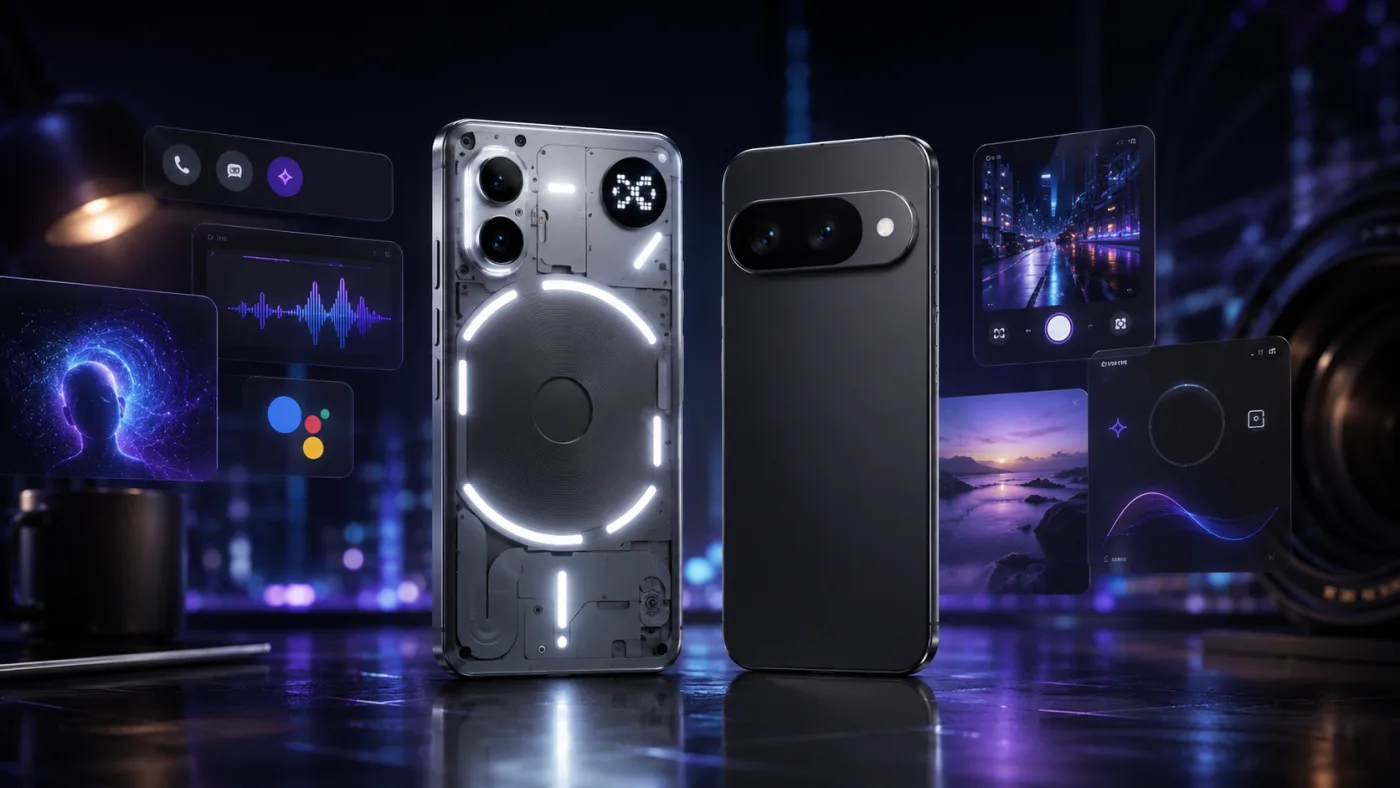
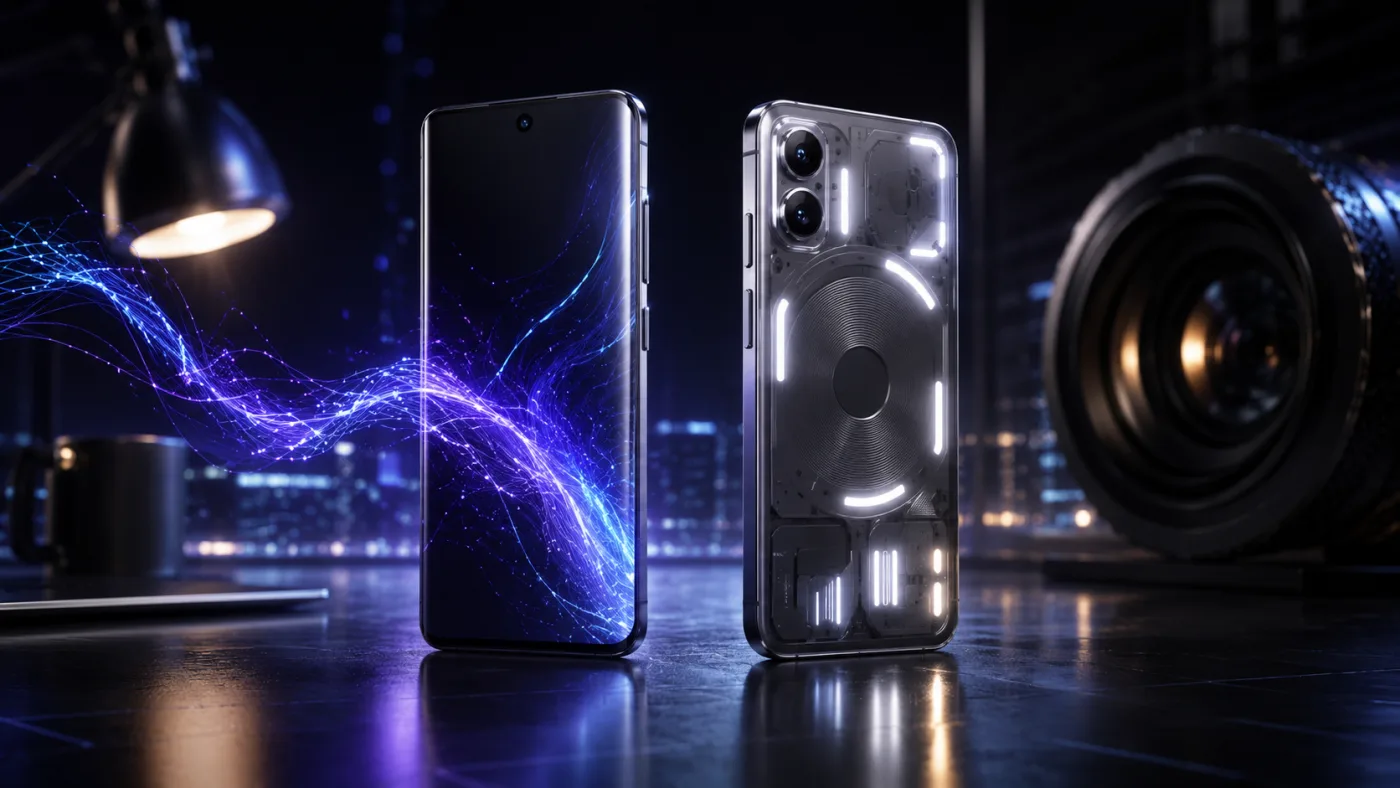
Nothing Phone 3 does the opposite. The transparent back reveals wireless charging coils and screws. The Glyph interface uses LED strips that light up for notifications, volume levels, and timers. It looks futuristic and unique. No other phone on the market looks like this. Build quality is excellent with Gorilla Glass Victus on both sides and an aluminum frame.
Both phones have IP54 splash resistance, which protects against light rain but not submersion. Neither matches IP68 flagships, which is a reasonable compromise at this price point.
Winner: Nothing (uniqueness and conversation-starting design) / Motorola (traditional premium feel) - personal preference matters most here.
Display Experience
Display quality favors Motorola Edge 60 Pro. The 6.7-inch curved pOLED panel runs at 144Hz refresh rate, which makes scrolling even smoother than standard 120Hz. Peak brightness hits 2000 nits, ensuring excellent outdoor visibility. Colors are vibrant with good calibration out of the box. The curved edges create an immersive feel for videos and games, though some users dislike accidental touches (Motorola's palm rejection is above average).
Nothing Phone 3 uses a flat 6.7-inch LTPO OLED display. It runs at 120Hz and reaches 1800 nits peak brightness. The flat design benefits gamers and anyone who applies tempered glass screen protectors. Color accuracy is excellent, and LTPO technology allows refresh rate to drop to 1Hz for battery savings. The lack of curve means no accidental touches.
For media consumption and immersive feel, Motorola wins. For practicality and gaming, Nothing's flat display is better.
Winner: Motorola (higher brightness, 144Hz refresh rate, curved premium feel)
Performance and Gaming
Raw performance favors Nothing Phone 3. The Snapdragon 8 Gen 3 is a true flagship chip, while Motorola uses Snapdragon 8s Gen 3. The difference matters in demanding games and heavy multitasking. Nothing also offers higher RAM configurations (up to 16GB) and faster storage (UFS 4.0).
In day-to-day tasks like social media, messaging, and web browsing, both phones feel equally fast. You won't notice differences in normal use. But fire up Genshin Impact, Call of Duty Mobile, or video editing apps, and Nothing maintains higher frame rates with less thermal throttling.
Motorola's gaming performance is still very good for the price, but Nothing pushes into true flagship territory.
Winner: Nothing (true flagship chip, more RAM, better sustained performance)
Camera Comparison
Camera systems reveal different priorities. Motorola Edge 60 Pro includes a telephoto lens, giving it 2x optical zoom and usable portrait mode. The 50MP main camera with OIS captures good daylight photos with natural colors. Low light performance is acceptable but not class-leading. Motorola's processing leans toward natural, avoiding over-sharpening.
Nothing Phone 3 has only two rear cameras: 50MP main and 50MP ultrawide. The lack of telephoto is noticeable at 2x zoom and beyond, where digital zoom softens details. Nothing's image processing has improved significantly, with better dynamic range and more accurate colors than previous generations. Portrait mode relies on the main camera with software-based depth mapping.
For versatility, Motorola wins due to the telephoto lens. For main camera quality, both are closely matched with Nothing having a slight edge in computational processing.
Winner: Motorola (telephoto lens adds versatility)
Battery and Charging
This category is not close. Motorola Edge 60 Pro packs a 5,100mAh battery with 125W wired charging. You get from 0% to 100% in about 20 minutes. The 50W wireless charging reaches full in under an hour. Battery life easily lasts a full day of heavy use and 1.5 days for moderate users.
Nothing Phone 3 has a 4,700mAh battery with 65W wired charging (0-100% in about 45 minutes). Wireless charging is limited to 15W. Battery life is good for a full day but not exceptional. The smaller battery is a clear compromise for the unique design and Glyph system.
If battery and charging speed matter to you, Motorola is the obvious choice.
Winner: Motorola (much larger battery, dramatically faster charging)
Software Experience
Both phones offer near-stock Android experiences, but with different personalities. Motorola's Hello UI is very close to Google Pixel software. It adds useful Moto gestures (chop for flashlight, twist for camera) and a few customization options but no bloatware. Update policy is decent but not class-leading: 3 years of OS updates and 4 years of security patches.
Nothing OS 3.0 is more distinctive. It uses a monochrome icon theme, unique widget designs, and dot matrix aesthetics throughout. The Glyph interface integrates with software for visual notifications and productivity features. Nothing promises 4 years of OS updates and 5 years of security patches. The software feels cohesive and thoughtfully designed.
For pure cleanliness, both are excellent. For unique personality, Nothing wins.
Winner: Nothing (distinctive design, better update policy)
AI Features and Smart Tools
AI features are minimal on both compared to Pixel or Galaxy flagships. Motorola includes some AI scene detection in camera and smart battery optimization. Nothing offers AI-based wallpaper generation and smart Glyph patterns that learn your notification habits. Neither phone has generative AI editing or advanced assistant features.
If cutting-edge AI matters to you, neither is the right choice. Both focus on core smartphone experiences over AI gimmicks.
Winner: Tie (both offer basic AI features, neither stands out)
Price and Value
Globally, both phones target the $600 to $800 price range depending on storage and RAM configurations. Motorola Edge 60 Pro typically starts around $649 for 8GB/128GB, while Nothing Phone 3 starts around $699 for 12GB/256GB. Nothing offers better base storage, while Motorola offers better hardware specifications per dollar.
For buyers in India, prices vary by storage variant and seller. Check Flipkart, Amazon, and offline retailers like Croma and Vijay Sales for the best deals. Both brands often run bank offers with HDFC, ICICI, and SBI cards. Exchange bonuses can reduce effective price significantly. Nothing Phone 3 may have limited availability at launch, while Motorola is widely available across channels.
Value depends on your priorities. Motorola offers better hardware for less money. Nothing offers unique design and brand experience at a slight premium.
Which Phone Should You Buy?
Choose Motorola Edge 60 Pro if:
- Battery life and fast charging are top priorities
- You want a curved display for immersive media
- A telephoto camera matters for portraits and zoom
- You prefer traditional premium design
- Maximum hardware per dollar is your goal
Choose Nothing Phone 3 if:
- Unique design and brand identity appeal to you
- You want true flagship processor performance
- Clean software with distinctive aesthetics matters
- You're willing to compromise on battery and zoom for style
- You want a conversation-starting device
NXTrendz Verdict
The Motorola Edge 60 Pro and Nothing Phone 3 represent different philosophies at similar price points. Motorola offers better value through superior hardware: larger battery, faster charging, telephoto camera, and brighter display. It is the rational choice for buyers who want maximum specifications for their money.
Nothing Phone 3 appeals to emotion and identity. The transparent design, Glyph interface, and distinctive software make it feel special. It compensates for hardware compromises with personality. For many buyers, that uniqueness is worth the trade-offs.
Our recommendation: If you need a reliable, long-lasting device with great specs, buy Motorola Edge 60 Pro. If you want a phone that stands out and starts conversations, buy Nothing Phone 3. Both are excellent value phones that deliver flagship-like experiences without flagship prices.
Check detailed specifications on Motorola Edge 60 Pro specs and price and Nothing Phone 3 specs and price pages. Compare more smartphones on our Smartphones comparison page.
FAQs
Q1: Does Nothing Phone 3 have wireless charging?
Yes, Nothing Phone 3 supports 15W wireless charging. Motorola Edge 60 Pro supports faster 50W wireless charging.
Q2: Which phone has better water resistance?
Both have IP54 splash resistance, protecting against light rain and dust but not submersion.
Q3: Does Motorola Edge 60 Pro have a headphone jack?
No, both phones have removed the headphone jack. You will need USB-C headphones or Bluetooth earphones.
Q4: Which phone gets more software updates?
Nothing promises 4 years of OS updates and 5 years of security. Motorola offers 3 years OS and 4 years security. Nothing wins for longevity.
Q5: Is the Glyph interface useful or just a gimmick?
It is genuinely useful for visual notifications when your phone is face-down. Flip to Glyph mode shows notification patterns without the screen turning on. Some users love it; others ignore it.
Q6: Which is better for gaming?
Nothing Phone 3 with Snapdragon 8 Gen 3 offers better gaming performance, higher frame rates, and better thermal management than Motorola's 8s Gen 3.