Best Camera Phones in 2026: Don’t Buy Only by Megapixels (Do This Instead)
108MP sounds impressive, but it rarely takes better photos than a good 12MP sensor. This guide explains what actually makes a great phone camera – and which 2026 flagships deliver real results.
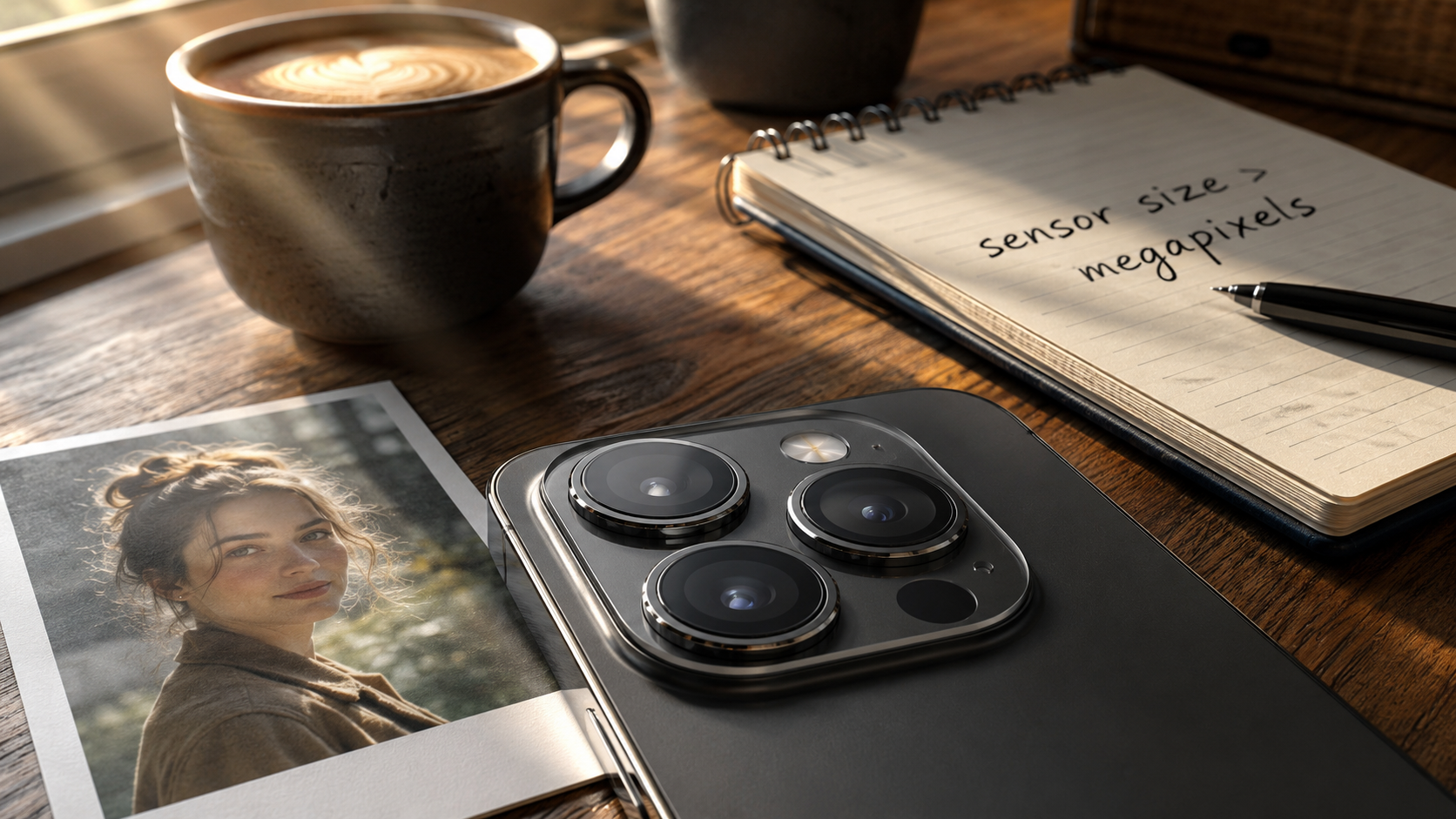
You see a phone ad: “108MP Ultra Camera!”. Another claims “200MP Pro Grade”. It is easy to assume more megapixels means better photos. But that is not how smartphone cameras work. In fact, some of the best camera phones 2026 has to offer use “only” 12MP or 50MP main sensors. They produce sharper, more natural images than many high-megapixel rivals.
This camera phone buying guide cuts through the marketing hype. You will learn why sensor size matters more than megapixels, what to look for in low light and zoom, and which flagship camera phones actually deliver for photography lovers. No technical overkill – just practical advice you can use before spending your money.
Why Megapixels Alone Are a Trap
Megapixels measure the number of tiny dots in a photo. More dots mean you can crop deeply or print very large. But for sharing on Instagram, WhatsApp, or even a 4K TV, a 12MP photo is already more than enough. The problem is that cramming 108 million or 200 million pixels onto a tiny smartphone sensor forces each pixel to be extremely small. Small pixels capture less light, leading to noisy, muddy images in low light.
That is why most high-megapixel phones use “pixel binning”. They combine data from 4, 9, or even 16 pixels into one “super pixel” to improve light capture. A 108MP phone often outputs 12MP photos by default. So the megapixel number on the box is largely for marketing.
What really matters: Sensor size (larger = more light), pixel size (larger = cleaner images), lens quality, image processing, and optical stabilisation.
The Real Specs to Check for Best Camera Phones 2026
Before looking at specific models, understand these four pillars. Any best smartphone camera must excel in these areas.
1. Sensor Size – Look for 1/1.3″ or Larger
A larger sensor captures more light and creates natural background blur (bokeh). Flagship sensors like the Sony LYT‑900 or Samsung GN2 are around 1/1.3″ to 1/0.98″. Avoid tiny 1/2″ sensors even if they claim 200MP.
2. Pixel Size – Above 1.2µm After Binning
After pixel binning, effective pixel size should be at least 1.2µm. The larger, the better for low light – some flagships reach 2.4µm.
3. Optical Image Stabilisation (OIS)
OIS compensates for hand shake. It is non‑negotiable for low‑light photos and smooth videos. Avoid any “camera phone” without OIS.
4. Processing and Software
Google Pixel and iPhone lead here. Samsung and OnePlus have caught up. A great sensor with bad processing still gives bad photos.
Best Camera Phones 2026 – By Use Case
There is no single “best”. The right phone depends on what you shoot: portraits, night scenes, action, or video. Here are the top contenders.
Best Overall Camera Phone for Most People: iPhone 17 Pro Max
Apple’s latest flagship (or iPhone 16 Pro if 17 not yet released) offers the most consistent camera experience. Photos have natural colours, excellent dynamic range, and reliable autofocus. The video recording remains unbeaten: Dolby Vision HDR, stabilisation that feels gimbal‑like, and seamless zoom switching between lenses. If you want a phone that works every time without fiddling with settings, this is it.
Downside: Expensive, and zoom range is shorter than Samsung’s.
Best for Zoom and Night Photography: Samsung Galaxy S26 Ultra
Samsung’s Ultra models (or S25 Ultra) pack a 200MP main sensor plus two telephoto lenses (3x and 10x optical). The 10x optical zoom captures details other phones cannot touch. Night mode is bright and detailed, though colours can be oversaturated. The AI editor can remove unwanted objects easily. For travellers and wildlife enthusiasts, this is the best phone for photography across distances.
Downside: Very large and heavy. Skin tones can look artificial.
Best for Natural Colours and Point‑and‑Shoot: Google Pixel 10 Pro
Google’s computational photography is magical. The Pixel 10 Pro (or Pixel 9 Pro) uses a modest 50MP sensor but produces jaw‑dropping photos thanks to software. It handles tricky lighting (backlit scenes, mixed temperatures) better than anyone. The “Best Take” feature merges multiple group shots so everyone looks at the camera. Night Sight is still class‑leading.
Downside: Video quality lags behind iPhone. Zoom is only 5x optical.
Best for Video Recording: iPhone 17 Pro / Pro Max
If you shoot for YouTube, TikTok, or family memories, iPhone remains the king. ProRes recording, log colour profiles, and stabilisation that works while walking. The microphone quality is also better than Android rivals. No other phone matches Apple’s video ecosystem.
Best Value Camera Flagship: OnePlus 13
The OnePlus 13 offers a 50MP main, 50MP ultra‑wide, and 64MP periscope zoom (6x lossless) for significantly less than Samsung or Apple. Hasselblad colour tuning gives natural, film‑like tones. For the price, it is a fantastic camera phone – especially if you do not need 10x zoom or pro‑level video.
Phone Camera Comparison: What to Test Before Buying
Do not trust marketing samples or single reviews. Here is a simple phone camera comparison checklist you can do yourself in a store or by watching detailed video reviews.
- Low‑light portrait: Take a photo of a friend indoors with a single lamp. Check skin texture and background noise.
- Moving subject: Ask someone to wave their hand quickly. Does the phone blur the motion? Some phones prioritise longer exposure and blur moving kids or pets.
- Zoom at 5x and 10x: Take a photo of text on a sign far away. Can you read it clearly?
- Selfie camera: Take a selfie in moderate indoor light. Many flagships still smooth skin unnaturally.
- Video walking test: Walk while recording. Is the footage shaky or smooth?
Before buying, compare live prices, warranty, seller rating and available offers. Use the comparison table and retailer links to check the latest deal.
Common Mistakes When Buying a Camera Phone
- Buying by megapixels only: A 200MP phone with a tiny sensor takes worse low‑light photos than a 12MP iPhone.
- Ignoring ultra‑wide quality: Many flagships cheap out on the ultra‑wide lens – it becomes soft and distorted at the edges.
- Not testing video: Great photos but shaky, noisy video ruins memories.
- Believing more lenses = better: A 2MP macro or depth sensor is useless filler.
- Forgetting about software updates: A great camera becomes frustrating if the brand stops improving processing after a year.
Megapixels vs Sensor Size – A Simple Explanation
Think of megapixels as a grid of tiny buckets. Sensor size is the total area of the roof collecting rainwater. If you have 200 tiny buckets (200MP) on a small roof (small sensor), each bucket collects very little water – your photo is dark and noisy. If you have 50 larger buckets (50MP) on a big roof (large sensor), each bucket collects more water – your photo is brighter and cleaner.
That is why professional cameras have large sensors with “only” 20‑50MP. And why a flagship phone with a 1/1.3″ sensor and 50MP will outperform a cheap phone with a 1/2″ sensor and 108MP every time.
NXTrendz Compare may earn a small commission when users buy through affiliate links, but our buying advice is based on specs, usability and value.
Who Should Buy a Dedicated Camera Phone vs a Mid‑Range Phone
Buy a flagship camera phone if:
- You print photos or crop heavily (require high resolution).
- You shoot in low light often (concerts, evening outings).
- You need optical zoom for travel or wildlife.
- You record video for content creation.
- You want the best possible portrait mode with natural bokeh.
Save your money and stick with a mid‑range phone if:
- You mostly shoot well‑lit outdoor photos of landscapes or food.
- You do not print or zoom into photos.
- You rarely shoot video.
- Budget is tight – a ₹30,000 phone like the Google Pixel 7a or Samsung A55 already takes very good photos.
Final Verdict: Best Camera Phones 2026
After testing and comparing hundreds of photos, here is the honest summary:
- Best overall still photos: Google Pixel 10 Pro – most natural, consistent, and forgiving.
- Best video: iPhone 17 Pro / Pro Max – unmatched stabilisation and colour.
- Best zoom: Samsung Galaxy S26 Ultra – 10x optical is a game changer.
- Best value: OnePlus 13 – 90% of the quality for 70% of the price.
- Best for beginners who want no hassle: iPhone 16 Pro – it just works.
Remember: the best camera phones 2026 will not make a bad photographer great, but a good photographer will love the flexibility. Focus on sensor size, stabilisation, and processing. Ignore the megapixel war. Your photos will thank you.
Frequently Asked Questions (FAQ)
1. Is 200MP better than 50MP for phone cameras?
Not necessarily. A 50MP camera with a large sensor (like 1/1.3″) will take cleaner low‑light photos than a 200MP camera with a small sensor. Only consider high megapixels if you need to crop heavily or print very large. For most users, 50MP is plenty.
2. Which phone has the best low‑light camera in 2026?
Google Pixel 10 Pro and Samsung Galaxy S26 Ultra lead in low light. Pixel keeps colours natural while brightening shadows. Samsung produces brighter, punchier night shots but can look artificial. iPhone is also excellent but slightly behind in extreme darkness.
3. Do I need a flagship phone for good photos?
No. Mid‑range phones like the Google Pixel 7a, Samsung A55, or Nothing Phone 3 take very good photos in daylight. But for low light, zoom, and video stabilisation, a flagship still wins. Determine your budget and needs.
4. What is more important – optical zoom or digital zoom?
Optical zoom (using a second lens) preserves quality. Digital zoom just crops and enlarges pixels, losing detail. For zoom beyond 3x, you want a dedicated telephoto lens. Samsung’s 10x optical zoom is the best available.